Herbs A–Z
Marshmallow Root: A Soothing Cold Infusion for Throat and Gut Comfort
What marshmallow root is, why herbalists prefer a cold infusion, what European reviewers and studies can (and cannot) say about it, and how to use it safely.

Dondre Burton
Founder, Herbal Harmony TN
Published 7 min read
Reviewed by Herbal Harmony Editorial — Checked for plain language and sourcing. Not a clinical review.
In this article
If you only know marshmallow as a campfire candy, the name is doing some historical work. The soft confection used to be made with the root of a real plant, Althaea officinalis. Today's supermarket marshmallows are mostly sugar and gelatin. The plant, though, is still used the old way: as a slick, soothing drink for a dry throat or an irritated stomach.
The useful part is not sweetness. It is mucilage, a gel-like fiber that becomes slippery in water and coats mucous membranes.
What is marshmallow root?
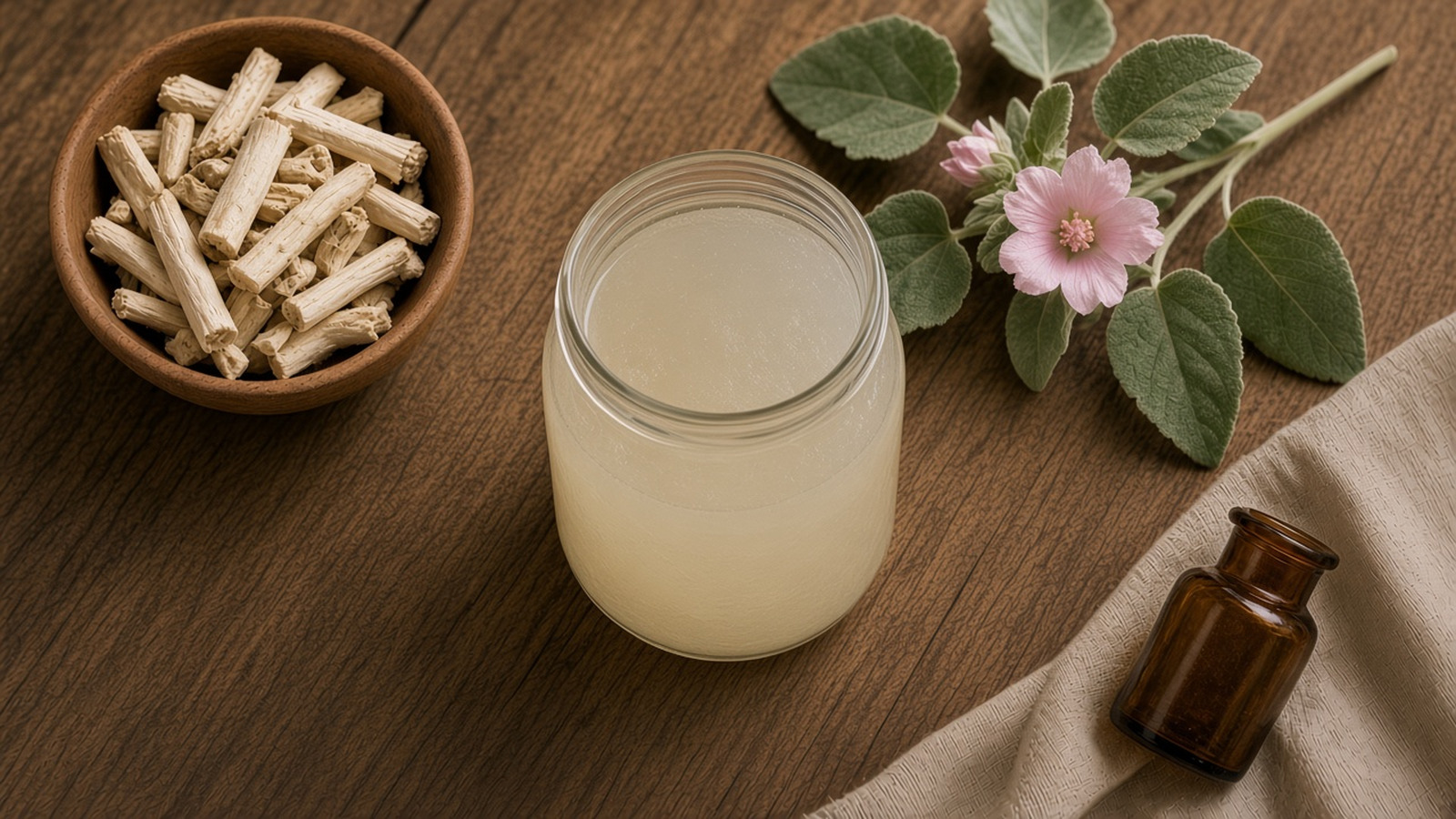
Marshmallow is a perennial in the mallow family, native to Europe and western Asia and now grown more widely. The dried root is the part most often used in herbal teas, syrups, lozenges, and capsules. Along with mucilage (a mix of polysaccharides), the root also contains pectin and flavonoids.
People have used mallow plants for a very long time. A professional monograph on Drugs.com notes documented use of marshmallow root as early as the ninth century BCE for sore throat, cough, stomach complaints, and as a topical dressing, and it places the plant in Greek and Roman herbal practice as well.
The candy connection is worth a second mention only so no one confuses the two. Candy marshmallows do not have the same soothing mucilage, and a bag of them is not a substitute for the root.
What the research really says
This is a plant where tradition is ahead of modern trials, and the most careful reviewers say so out loud.
The European Medicines Agency's Committee on Herbal Medicinal Products (HMPC) reviewed marshmallow root and concluded that preparations can be used, on the basis of long-standing traditional use, for two jobs: irritation of the mouth or throat with an associated dry cough, and mild discomfort of the stomach and gut. "Traditional use" is a specific regulatory phrase. It means the use is plausible and has a long, documented safety record in Europe (at least 30 years, including 15 years in the EU), not that large, well-controlled trials have proved it works.
The committee looked at the clinical research and found it wanting for a stronger claim. Two studies of marshmallow root syrup in about 900 children with mouth and throat irritation and dry cough reported less coughing, but they did not compare the syrup with another treatment, so firm conclusions were not possible. A further study in 63 adults with dry cough found that marshmallow root drops reduced cough while a placebo did not, but the herbal preparation was not described well enough to lean on. The HMPC assessment report is blunt: those studies can support traditional use, and they are not enough to establish "well-established" medicinal use. For stomach and gut discomfort, the committee noted that clinical data were lacking.
That is the honest scientific picture. Mucilage coating a dry, scratchy throat is a straightforward physical idea, and generations of herbalists have used the root that way. It is not a proven cure for an infection, asthma, reflux disease, or an ulcer. If a cough comes with shortness of breath, fever, or colored phlegm, or if stomach symptoms last more than a couple of weeks, that is a reason to see a clinician rather than keep sipping.
Why a cold infusion?
Hot tea is the usual way to brew leaves and flowers. Marshmallow root is different. The mucilage dissolves well in cool or room-temperature water, and herbalists generally prefer a cold infusion (also called a macerate or a cold soak) because it gives you that thick, slippery liquid the plant is known for.
The European Union herbal monograph also describes the comminuted (cut) root as a macerate in water, not as a typical boiling-hot infusion. For a dry throat, it lists about 0.5 to 3 grams of cut root in 150 ml of water (a little over half a cup), several times a day, with a maximum of 15 grams of root a day for adolescents and adults. For mild digestive discomfort, it lists 2 to 5 grams in 150 ml, three times a day, with the same 15-gram daily ceiling.
A kitchen tablespoon of cut, dried root is a rougher measure than a gram scale, and it can easily be more than those monograph amounts. The home method below is the one commonly used in practice. If you want to stay closer to the monograph, start at the low end.
How to make a cold infusion
- Put 1 to 2 tablespoons of dried, cut marshmallow root in a jar.
- Pour 1 cup of cool or room-temperature water over the root.
- Cover and let it sit at least 4 hours, or overnight, in the refrigerator or on the counter.
- Strain well. The liquid should look slightly cloudy and feel slick if you rub a drop between your fingers.
- Drink it as is, or gently warm it if you want a less chilly cup. Avoid a hard boil if your goal is that coating texture.
You can make up to about 3 cups a day, as long as the total amount of root stays in a sensible range. If you are starting out, use 1 tablespoon per cup.
The root also comes in capsules (a common label range is 2 to 6 grams a day) and in syrups or lozenges. Follow the product label for those, and use the same safety notes below.
Marshmallow is sometimes combined with other soothing plants. Mullein leaf, which we have written about in Mullein Leaf: The Herb That Started It All, is another traditional demulcent. Peppermint, covered in our peppermint leaf tea article, is a more common after-meal tea for digestive comfort. Harmony Herbal Blend includes mullein for that same coating tradition, though it does not contain marshmallow root.
Who should be careful
At the time of the HMPC review, no side effects had been reported for the marshmallow root medicines it assessed, and Drugs.com also notes that serious reactions were not reported in the clinical trials it reviewed. "Generally well tolerated" is not the same as "right for everyone."
- Give it space from other medicines. Mucilage can slow or reduce the absorption of medicines, vitamins, or minerals taken by mouth. The EU monograph says, as a precaution, not to take marshmallow 30 to 60 minutes before or after other medicinal products. A 1 to 2 hour gap is a more cautious window and is a reasonable habit at home.
- Blood sugar. Animal research and anecdotal reports have raised the possibility that marshmallow could lower blood sugar. That evidence in people is not strong, but if you have diabetes or take medicine that lowers blood sugar, monitor your readings and talk with your clinician before using the root regularly. Some clinicians also suggest stopping it a couple of weeks before scheduled surgery for the same reason.
- Pregnancy and breastfeeding. Safety data are limited. Drugs.com advises avoiding use because information is lacking. Do not use marshmallow as a medicinal tea in pregnancy or while nursing unless a qualified clinician agrees.
- Children. The EU monograph does not recommend marshmallow root macerates for throat use in children under 3, or for digestive use in children under 12, because of limited data. A pediatric clinician should be involved before giving it to a child.
- Allergy. Avoid it if you are allergic or hypersensitive to marshmallow or other mallow-family plants.
- When to get help. The monograph also says to see a doctor or qualified practitioner if throat symptoms last more than a week, if digestive symptoms last more than two weeks, or if a cough comes with shortness of breath, fever, or purulent sputum.
Marshmallow root is a soothing, traditional drink, not a treatment for an infection or a chronic digestive disease, and not a reason to change or skip a prescribed medicine.
The bottom line
Marshmallow root earned its name and its reputation from a simple physical quality: mucilage that coats a dry throat or an irritated gut. European reviewers accept that traditional use, and they are equally clear that modern trials have not firmly proven it. If you try it, make a cold infusion, keep it away from your other medicines by an hour or two, and treat a lingering cough or stomach problem as a reason to get care, not to keep experimenting.
Harmonize Life.
Sources
Works and references cited in this piece.
- European Medicines Agency, Committee on Herbal Medicinal Products. Althaeae radix (marshmallow root): herbal medicinal product summary.
- European Medicines Agency, Committee on Herbal Medicinal Products. European Union herbal monograph on Althaea officinalis L., radix. EMA/HMPC/436679/2015. July 12, 2016.
- European Medicines Agency, Committee on Herbal Medicinal Products. Assessment report on Althaea officinalis L., radix. EMA/HMPC/436680/2015. July 12, 2016.
- Drugs.com Professional. Mallows (Althaea officinalis and related species). Last updated June 22, 2026.
Medical disclaimer
This article is for education only. These statements have not been evaluated by the Food and Drug Administration. It is not intended to diagnose, treat, cure, or prevent any disease, and it is not a substitute for care from a qualified clinician. Talk with your healthcare professional before using herbs, especially if you are pregnant or nursing, have a medical condition, give herbs to a child, or take medication.
About the author
Dondre Burton
Founder, Herbal Harmony TN
Dondre Burton founded Herbal Harmony TN in Memphis. Mullein leaf was his way into herbs, and he writes about teas, plants, and everyday rituals in plain language from his own experience.