0–3 hours
Fed State
Your body digests and stores your last meal. What you eat here sets up how smoothly the whole fast goes.
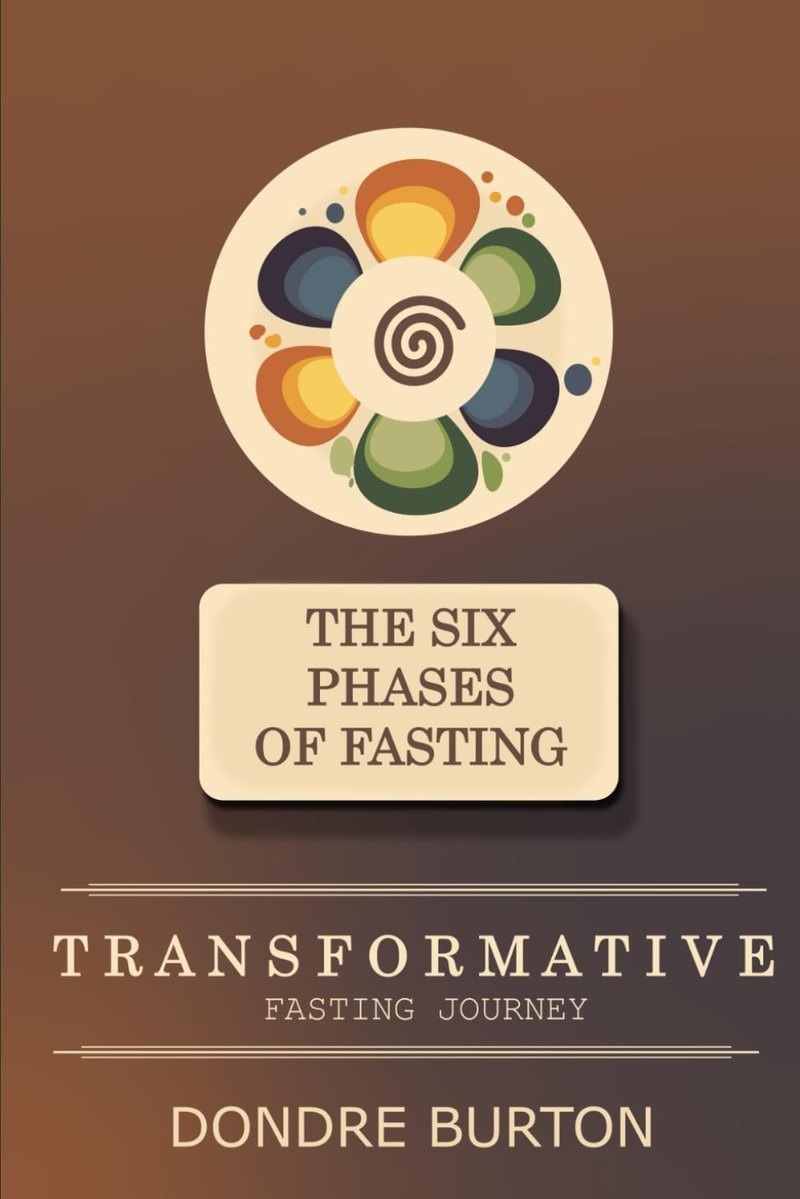
The Book
by Dondre Burton
Most fasting advice tells you how long to go without food. This book shows you what your body is actually doing along the way, phase by phase, from your last meal to your first bite back, and how to move through each one with less struggle.
Paperback, available on Amazon.
What's Inside
Every fast moves through the same stages. Knowing where you are, and what's coming next, is what turns a hard fast into a steady one.
0–3 hours
Your body digests and stores your last meal. What you eat here sets up how smoothly the whole fast goes.
3–12 hours
Digestion wraps up and your liver starts drawing on stored glycogen. Mild hunger comes in waves and passes.
12–24 hours
Glycogen runs low and your body leans into fat for fuel. Hunger often peaks here, and this is where most people quit.
About 18–48 hours
Your liver turns fat into ketones. Many people describe steadier energy and an appetite that finally quiets down.
48–72+ hours
Your cells break down and recycle worn-out parts, a deep housekeeping process. Fasts this long call for a doctor's OK first.
Over 4–24 hours
How you break a fast decides how good you feel after it. The book walks you through it hour by hour.
Who It's For
Free Download
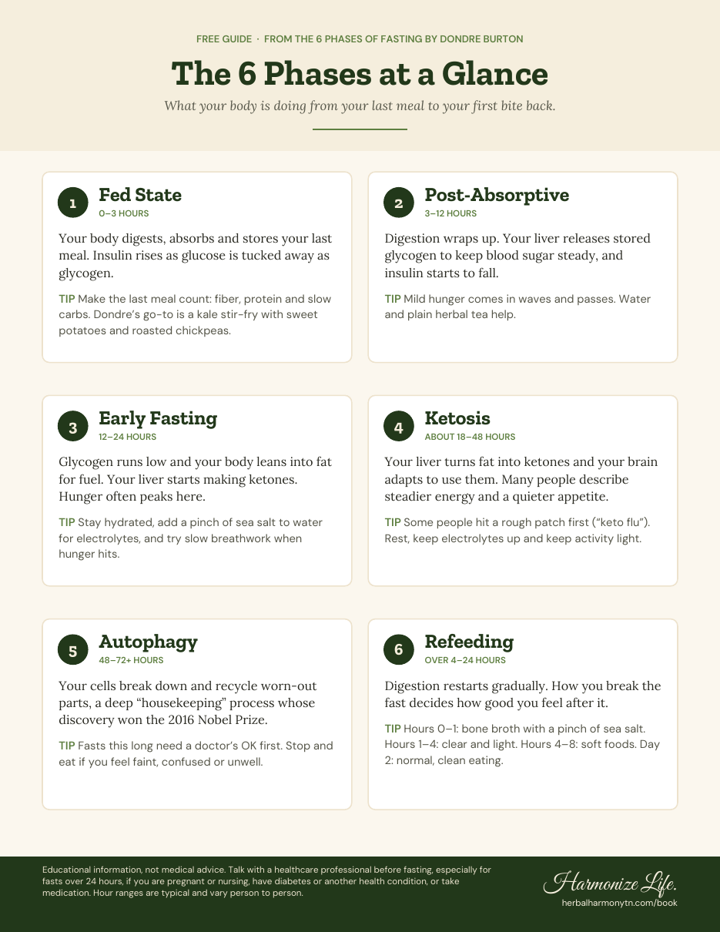
A one-page guide to every phase: the hours, what's happening in your body, and one practical tip for each. Print it, stick it on the fridge, check it mid-fast.
You'll also get new Herbal Harmony posts and be first to hear about future releases. Unsubscribe anytime.
Check your inbox for a quick email to confirm your subscription.
There's more on the way. Join the list above and you'll be the first to know.
This book and guide share educational information about fasting, not medical advice. Talk with a healthcare professional before starting any fast, especially fasts over 24 hours, or if you are pregnant or nursing, have diabetes or another health condition, or take medication. Hour ranges are typical and vary from person to person.