Herbs A–Z
Peppermint Leaf Tea: A Refreshing Classic for Digestion and Calm
A look at peppermint leaf tea's soothing flavor, traditional uses for digestion and relaxation, and simple tips for brewing a great cup at home.

Dondre Burton
Founder, Herbal Harmony TN
Published 3 min read
Reviewed by Herbal Harmony Editorial — Checked for plain language and sourcing. Not a clinical review.
In this article
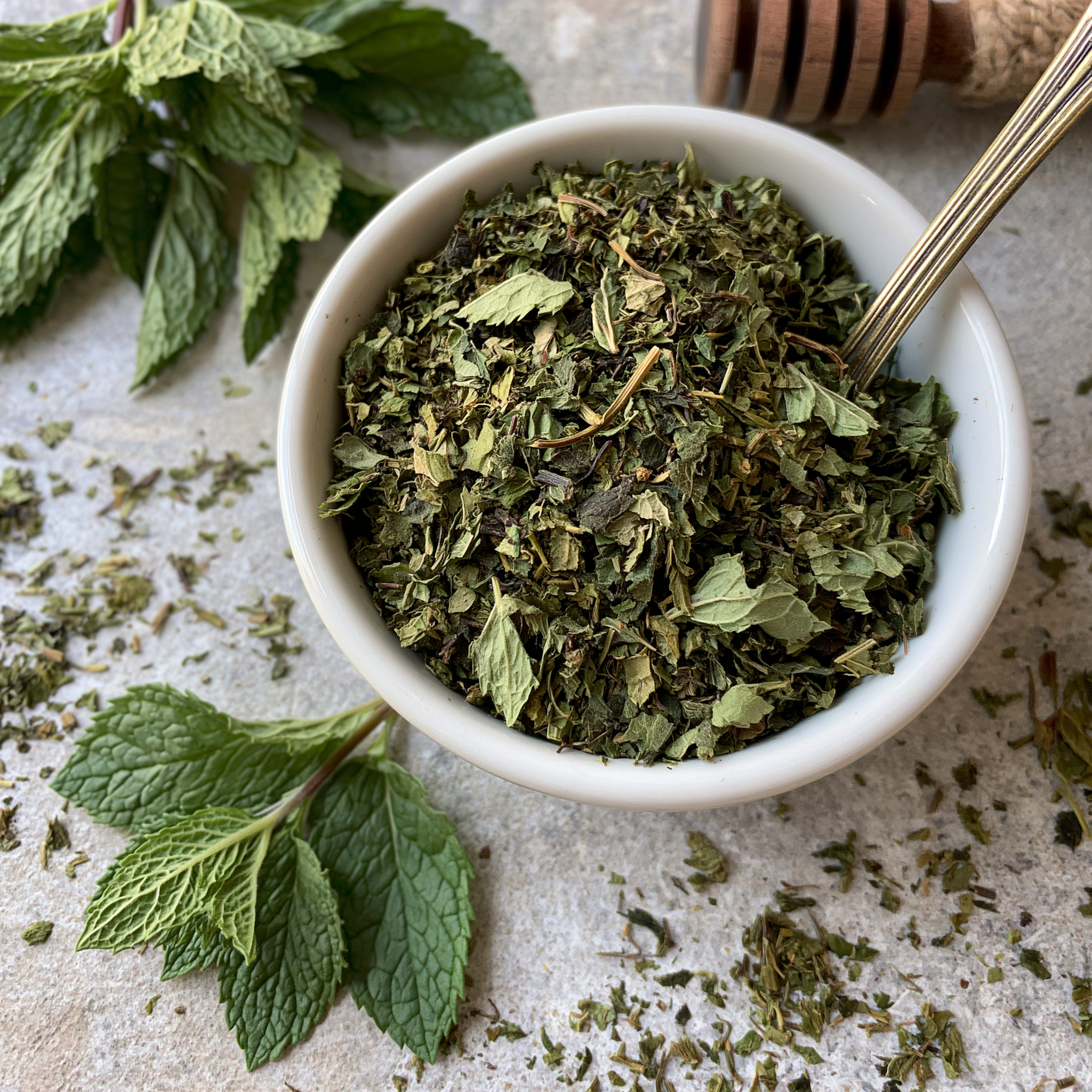
There's something about the smell of peppermint that instantly wakes up the senses, and when that same bright, cooling flavor is steeped into a cup of tea, it becomes one of the most comforting rituals in the herbal world. Made from the dried leaves of Mentha piperita, peppermint leaf tea has been brewed for generations as an after-dinner brew, a mid-afternoon pick-me-up, and a caffeine-free way to unwind at the end of a long day.
What Is Peppermint Leaf Tea?
Peppermint itself is a natural hybrid of spearmint and water mint, prized for its high concentration of menthol, the compound responsible for that signature cooling sensation. When the leaves are dried and steeped in hot water, they release a fragrant, slightly sweet brew with a cooling finish. Unlike black or green tea, peppermint leaf tea is naturally caffeine-free, making it a popular choice any time of day, including right before bed.
Traditional Uses and Benefits
Peppermint has a long history in herbalism, and many people continue to reach for it today for a variety of everyday reasons:
- Supporting digestion - Peppermint tea is one of the most common home remedies sipped after a heavy meal, traditionally used to ease feelings of fullness and bloating.
- Calming an upset stomach - Herbalists have long recommended peppermint for occasional stomach discomfort and mild nausea.
- Freshening breath naturally - The menthol content leaves the mouth feeling clean and refreshed, without any added sugar.
- Easing tension - The aroma alone is often described as soothing, and many people enjoy a warm cup as part of a wind-down routine in the evening.
- Clearing the senses - A hot cup of peppermint tea is a popular comfort drink when dealing with a stuffy nose or seasonal sniffles.
As with any herbal remedy, these uses are rooted in tradition and personal experience rather than a substitute for medical treatment, so it's always worth checking with a healthcare provider about any ongoing health concerns.
How to Brew the Perfect Cup
Peppermint leaf tea is refreshingly simple to prepare:
- Bring fresh water to a boil, then let it sit for about a minute so it's just below boiling.
- Add one to two teaspoons of dried peppermint leaves (or one tea bag) per cup.
- Pour the hot water over the leaves and cover the cup to trap the aromatic oils.
- Steep for 5 to 7 minutes, longer if you prefer a stronger, more intensely minty flavor.
- Strain the leaves, and enjoy on its own or with a touch of honey.
For an iced version, simply brew a stronger batch, let it cool, and pour over ice with a few fresh mint leaves for garnish.
A Few Things to Keep in Mind
Peppermint tea is generally well tolerated, but it isn't the right fit for everyone. People who experience acid reflux or GERD sometimes find that peppermint relaxes the muscle that keeps stomach acid down, which can make symptoms worse. Pregnant or nursing individuals, and anyone taking medication, should check with a doctor before making peppermint tea a daily habit.
A Simple Pleasure
Whether it's a post-dinner ritual, a mid-morning breather, or a caffeine-free evening treat, peppermint leaf tea remains a small, easy pleasure that's stood the test of time. Its bright flavor and long herbal history make it a lovely addition to any tea collection, one cup at a time.
Sources
- This article is drawn from traditional herbal use and the author's experience. It does not cite peer-reviewed studies.
Medical disclaimer
This article is for education only. These statements have not been evaluated by the Food and Drug Administration. It is not intended to diagnose, treat, cure, or prevent any disease, and it is not a substitute for care from a qualified clinician. Talk with your healthcare professional before using herbs, especially if you are pregnant or nursing, have a medical condition, give herbs to a child, or take medication.
About the author
Dondre Burton
Founder, Herbal Harmony TN
Dondre Burton founded Herbal Harmony TN in Memphis. Mullein leaf was his way into herbs, and he writes about teas, plants, and everyday rituals in plain language from his own experience.