Herbs A–Z
Lavender Tea and Scent for Calm: What the Research Really Says
A plain-English guide to lavender as a culinary tea and a scent: what studies show about calm and sleep, how to use the flowers safely, and why essential oil should never be swallowed.
Dondre Burton
Founder, Herbal Harmony TN
Published 7 min read
Reviewed by Herbal Harmony Editorial — Checked for plain language and sourcing. Not a clinical review.
In this article
Lavender is one of those plants people recognize before they can name it. The scent shows up in soaps, bath salts, linen sprays, and evening teas, and the name itself comes from the Latin lavare, "to wash." The hop from "this smells calming" to "this treats anxiety or insomnia" is where the research gets more careful than a perfume ad would suggest.
This article looks at common or English lavender, Lavandula angustifolia, and at the difference between a cup of flower tea, a scent in the room, a diluted oil on the skin, and a studied oral capsule. Those are not interchangeable.
What is lavender?
Lavandula angustifolia is an aromatic evergreen shrub native to the Mediterranean. The dried flower buds are the part used in cooking and tea. The concentrated essential oil, distilled from the flowering tops, is a completely different product: much stronger, not a food, and not something to put in a mug.
The scent most people think of as "lavender" comes largely from two constituents, linalool and linalyl acetate. Those names often appear in discussions of relaxation, but a constituent on a lab list is not the same as a proven effect from a homemade tea or a few drops in a diffuser.
For tea, buy culinary-grade dried lavender: flowers sold as a food or tea herb, not decorative potpourri or craft material, which may be scented, dyed, or otherwise not meant to be drunk.
What the research really says
NCCIH's current fact sheet is a fair summary: studies have been done for a variety of conditions, but more high-quality research is needed before anyone can draw firm conclusions. The details matter, because different studies used different forms.
Oral lavender oil capsules are the best-studied form for anxiety, and they are not a DIY project. Several trials have tested a specific oral lavender oil preparation, often discussed under the name Silexan. NCCIH says those studies suggest a possible benefit for anxiety, including anxiety with some symptoms of depression, but it also flags important limits: small samples, a lack of independent funding and testing, and little participant diversity.
A 2019 systematic review of lavender in many forms found that lavender taken by mouth may help anxiety. Oil used in massage may also help, but reviewers could not tell whether the benefit came from the oil or the massage, and NCCIH notes that many of the studies were low quality. (Donelli et al., Phytomedicine; Yap et al., Scientific Reports)
The key safety point: a studied oral capsule is a measured, manufactured product. It is not the same as swallowing essential oil from a bottle. Essential oils are highly concentrated, can irritate the mouth, throat, and gut, and are not a kitchen ingredient. If a clinician ever recommends an oral lavender product, it should be one made and labeled for that use, not oil from the aromatherapy shelf.
Aromatherapy is popular, and the evidence is still unclear. People often report that the scent helps them unwind. NCCIH is more cautious: it is unclear whether aromatherapy with lavender oil has reliable benefits for anxiety, stress, symptoms of depression, some kinds of pain, sleep quality, or insomnia. Memorial Sloan Kettering makes a related point: when lavender oil is used with massage, the massage itself may be doing much of the work.
Sleep and mood research is preliminary. NCCIH says early, small studies have suggested that oral lavender capsules or lavender tea might ease symptoms of depression in some people, and that this should be read with caution. Topical lavender did not appear to help. Memorial Sloan Kettering notes that several studies suggest lavender can improve sleep, and mentions one study in which inhaling the oil appeared to help migraine. None of that is a treatment.
The honest pattern: Lavender is a lovely culinary and aromatic plant, and some oral capsule trials suggest a modest benefit for anxiety. A cup of flower tea or a diffuser in the evening can still be a calming ritual. The research has not shown that everyday aromatherapy or tea is a reliable treatment, and essential oil from a bottle should never be swallowed.
How to use lavender at home
As a tea (culinary-grade flowers only):
- Use 1 to 2 teaspoons of dried lavender flowers per cup of hot water.
- Cover the cup and steep 5 to 10 minutes, then strain.
- Start with a smaller amount if the flavor is too perfumed. A little honey, or a blend with a milder herb, can soften it.
- Enjoy it in the evening, or whenever you want a caffeine-free cup. This is a food-like tea, not a measured medical dose.
As a scent:
- Add 2 to 4 drops of essential oil to a diffuser in a ventilated room, especially before bed.
- For linens, a light water mist with a little essential oil is a common homemade approach. Keep the spray off your face and out of your eyes.
- For a bath, mix a few drops into a carrier first (a spoonful of unscented oil or an unscented bath base) so the oil does not sit in a slick on the water and irritate the skin.
On the skin:
- Always dilute essential oil in a carrier oil before it touches the skin. A cautious starting point is 2 to 3 drops per teaspoon of a carrier such as jojoba or sweet almond oil, applied to the wrists, temples, or chest.
- Do a patch test on a small area first. Topical lavender can cause allergic skin reactions in some people, and Memorial Sloan Kettering also notes possible sensitivity to sunlight. Keep it away from the eyes, inner ears, and broken skin, and do not use it undiluted.
Do not swallow essential oil. Culinary flowers in tea are one thing; a dropper of essential oil is another. If a child or pet swallows essential oil, contact poison control or a clinician right away.
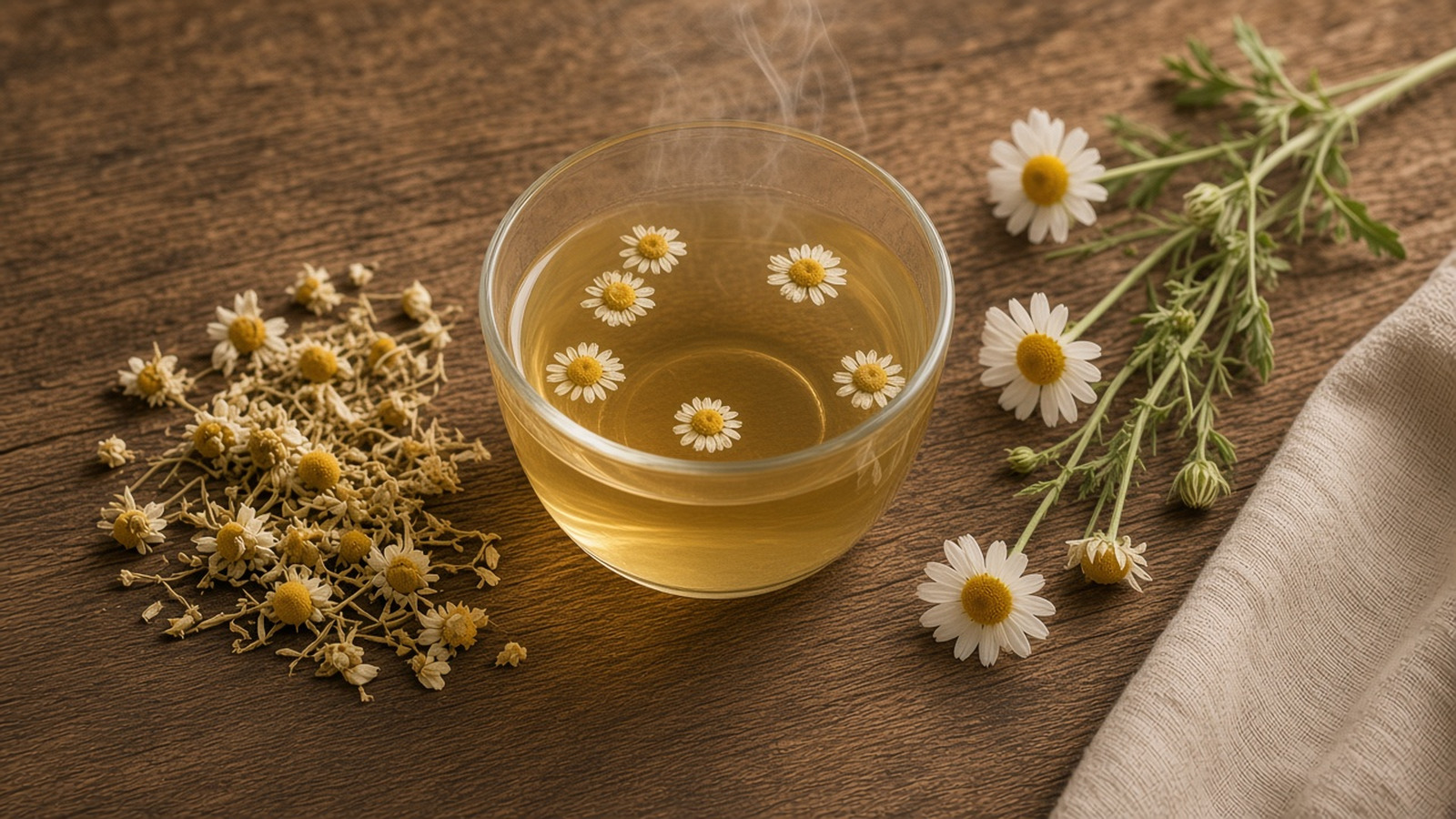
If you already enjoy caffeine-free evening teas, peppermint leaf tea and chamomile tea are two other cups with a long tradition of winding down.
Who should be careful
NCCIH considers lavender likely safe in typical food amounts. The oral products tested in anxiety studies may be tolerated short-term, though some people report diarrhea, headache, nausea, or burping. Aromatherapy is considered possibly safe, but it can cause headache or coughing.
- Sedatives, sleep medicines, and surgery. Lavender could theoretically add to the effects of sedative drugs or herbs. That matters if you take a sleep or anti-anxiety medicine, or another drug that causes drowsiness, and it matters before a procedure. Memorial Sloan Kettering advises caution with sedatives, hypnotics, and certain other nervous-system drugs.
- Pregnancy and breastfeeding. Little is known about safety. Memorial Sloan Kettering says excessive internal use should be avoided in pregnancy and while nursing. If you use culinary tea at all, keep it to food-like amounts, and check with a clinician before using essential oil or any internal product.
- Children and hormonal questions. A few case reports have described breast tissue swelling in children who used topical products containing lavender, sometimes with tea tree oil. NCCIH says it is unclear whether lavender was responsible, because that swelling can have many causes. Memorial Sloan Kettering is more cautious and notes weak hormonal activity in lab studies. Until more is known, do not use lavender essential oil regularly on a child's skin, and people with hormone-sensitive conditions, including some cancers, should ask their care team before long-term oral or topical use.
- Allergies and skin. Stop if you get a rash, itching, or irritation, and patch-test a diluted oil first.
- Depression and anxiety disorders. These can be serious. A tea or a diffuser is not a replacement for professional care, and NCCIH advises seeing a healthcare provider if you or someone in your family may have depression.
The bottom line
Lavender has earned its place in evening routines because the scent is familiar and the flower makes a gentle, caffeine-free tea. Some measured oral capsules have shown promise for anxiety; everyday tea and aromatherapy have a thinner evidence base. Use culinary-grade flowers in the cup, keep essential oil diluted and on the skin or in the air, and never treat the bottle as something to drink.
Harmonize Life.
Sources
Works and references cited in this piece.
- National Center for Complementary and Integrative Health. Lavender: Usefulness and Safety. Last updated February 2025.
- National Center for Complementary and Integrative Health. Anxiety and Complementary Health Approaches. Last updated September 2024.
- Memorial Sloan Kettering Cancer Center. Lavender (About Herbs). Last updated May 23, 2025.
- Donelli D, Antonelli M, Bellinazzi C, Gensini GF, Firenzuoli F. Effects of lavender on anxiety: a systematic review and meta-analysis. Phytomedicine. 2019.
- Yap WS, Dolzhenko AV, Jalal Z, Abdul Hadi M, Khan TM. Efficacy and safety of lavender essential oil (Silexan) capsules among patients suffering from anxiety disorders: a network meta-analysis. Scientific Reports. 2019.
Medical disclaimer
This article is for education only. These statements have not been evaluated by the Food and Drug Administration. It is not intended to diagnose, treat, cure, or prevent any disease, and it is not a substitute for care from a qualified clinician. Talk with your healthcare professional before using herbs, especially if you are pregnant or nursing, have a medical condition, give herbs to a child, or take medication.
About the author
Dondre Burton
Founder, Herbal Harmony TN
Dondre Burton founded Herbal Harmony TN in Memphis. Mullein leaf was his way into herbs, and he writes about teas, plants, and everyday rituals in plain language from his own experience.