Recipes
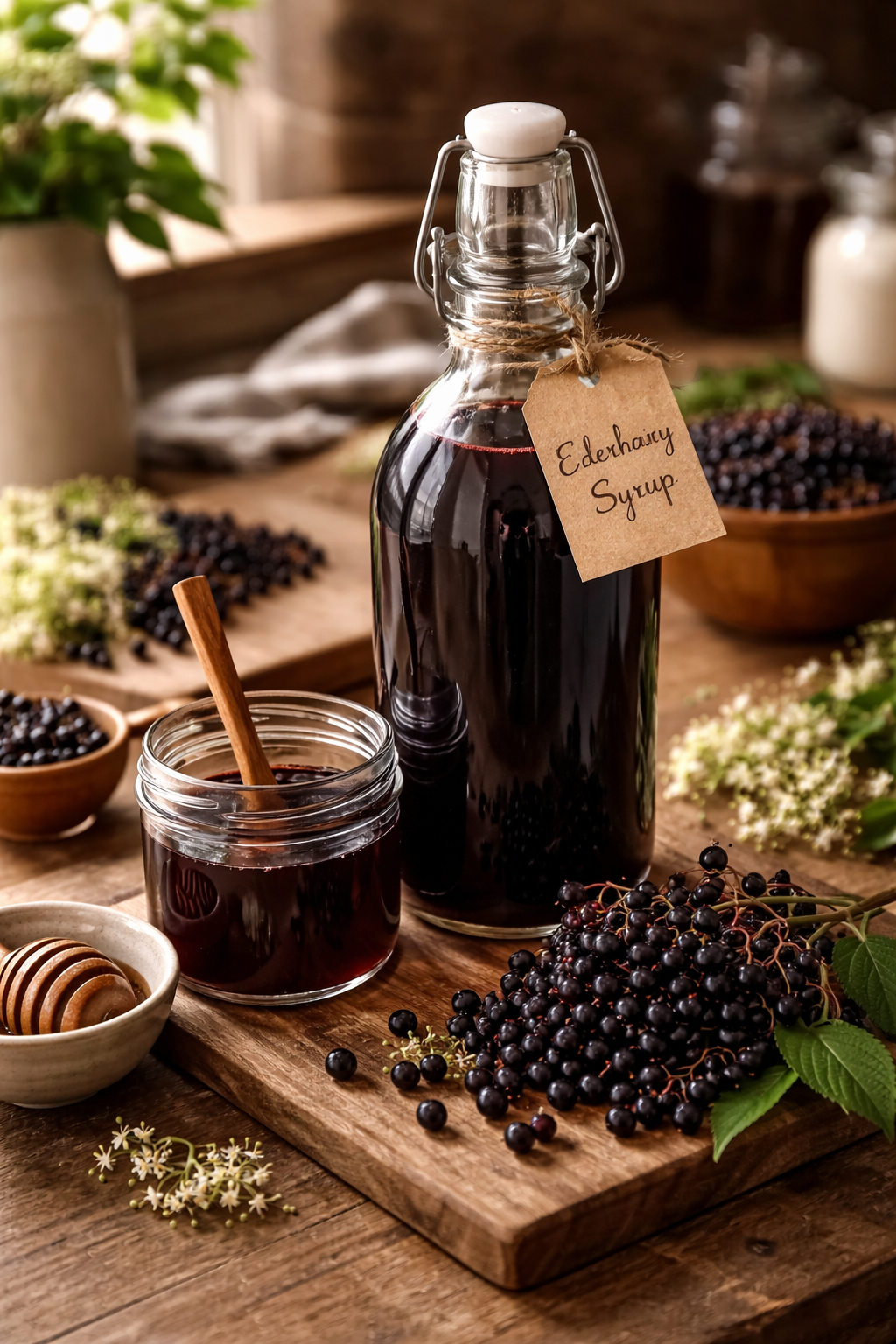
The Ancient Power of Elderberry Syrup
How a simple purple berry became one of nature's most trusted immune allies

Dondre Burton
Founder, Herbal Harmony TN
Published 3 min read
Reviewed by Herbal Harmony Editorial — Checked for plain language and sourcing. Not a clinical review.
In this article
Long before pharmacies lined every corner, people turned to the earth. They watched the seasons, studied the plants, and passed down remedies from one generation to the next. Among the most enduring of those remedies is the elderberry a small, dark purple fruit that has quietly supported human health for centuries.
🌿 Rooted in History
The European elder tree (Sambucus nigra) grows across Europe, North America, and parts of Asia and Africa. Its berries and flowers have been used in folk medicine traditions for generations brewed into teas, cooked into syrups, and blended into wines. Across cultures and continents, people kept coming back to this same tree. That kind of staying power speaks for itself.
🌿 What Makes Elderberry Special
Elderberries are dense with anthocyanins the same antioxidant pigments that give them their signature deep purple color. These compounds, along with flavonoids like quercetin and rutin, work together to support the body's natural defenses. Research is still evolving, but preliminary studies suggest elderberry may help shorten the duration of cold and flu symptoms and support overall immune function.
When you combine elderberry with warming, synergistic ingredients like fresh ginger, cinnamon, and cloves, you create something greater than the sum of its parts. Each ingredient brings its own history of traditional use ginger for circulation and digestion, cinnamon for its warming anti-inflammatory qualities, cloves for their antimicrobial strength.
Immune Support
Rich in antioxidants and polyphenols that nourish the body's natural defenses
Respiratory Comfort
Traditionally used to ease cold and flu symptoms and support recovery
Anti-Inflammatory
Flavonoids and polyphenols help calm inflammation throughout the body
Whole-Body Tonic
Paired with raw honey, ginger, and spices for a nourishing daily ritual
🌿 The Honey Matters
In a proper elderberry syrup, raw honey does more than sweeten it contributes its own antimicrobial properties, enzymes, and prebiotic compounds. That's why it's important to let the berry decoction cool before stirring in the honey. Heat destroys the very qualities that make raw honey a healing ingredient in its own right. When the two come together at the right temperature, the result is a syrup that's both nourishing and naturally preserved.
🌿 A Daily Practice
Elderberry syrup fits naturally into a daily wellness rhythm. A tablespoon in the morning with your tea, drizzled over oatmeal, or taken straight it's a small, intentional act of care. During cold and flu season or when you feel something coming on, you can increase your intake to support your body through the challenge.
This isn't about quick fixes. It's about building a relationship with the plants and traditions that have sustained us for generations. That's what Herbal Harmony is rooted in the belief that nature provides, and our job is simply to listen.
Healing begins when we return to what the earth already knows.
Nature doesn't rush, and neither does true healing. Elderberry reminds us that the most powerful medicine often grows on the vine.
🍯 HERBAL HARMONY🔥
Disclaimer: This post is for educational purposes only and is not intended to diagnose, treat, cure, or prevent any disease. Elderberry research is ongoing and evidence is not yet conclusive. Always consult with a qualified healthcare provider before starting any new supplement, especially if you are pregnant, nursing, taking medications, or managing an autoimmune condition. Raw honey should not be given to children under one year of age.
Sources
- This article is drawn from traditional use and the author's experience. It mentions preliminary research but does not name the studies.
Medical disclaimer
This article is for education only. These statements have not been evaluated by the Food and Drug Administration. It is not intended to diagnose, treat, cure, or prevent any disease, and it is not a substitute for care from a qualified clinician. Talk with your healthcare professional before using herbs, especially if you are pregnant or nursing, have a medical condition, give herbs to a child, or take medication.
About the author
Dondre Burton
Founder, Herbal Harmony TN
Dondre Burton founded Herbal Harmony TN in Memphis. Mullein leaf was his way into herbs, and he writes about teas, plants, and everyday rituals in plain language from his own experience.